From the Machine Room to the GRAMMYS: Andrew Law on Mixing DUCKWRTH in Dolby Atmos
Andrew Law is a Los Angeles-based mix engineer working across stereo and Dolby Atmos, with a background spanning sound design, immersive storytelling and re-recording mixing.
His immersive mix of DUCKWRTH's All American F**k Boy earned a nomination for Best Immersive Audio Album at the 2026 Grammy Awards. He came up through post-production, calibrating Atmos stages at a Hollywood mix house before moving into music.
Russ Hughes caught up with him to talk about learning immersive audio from the machine room outward, mixing a Grammy-nominated album with zero brief, and how Immersive Master Pro cut his post-mix admin to a quarter of what it used to be.
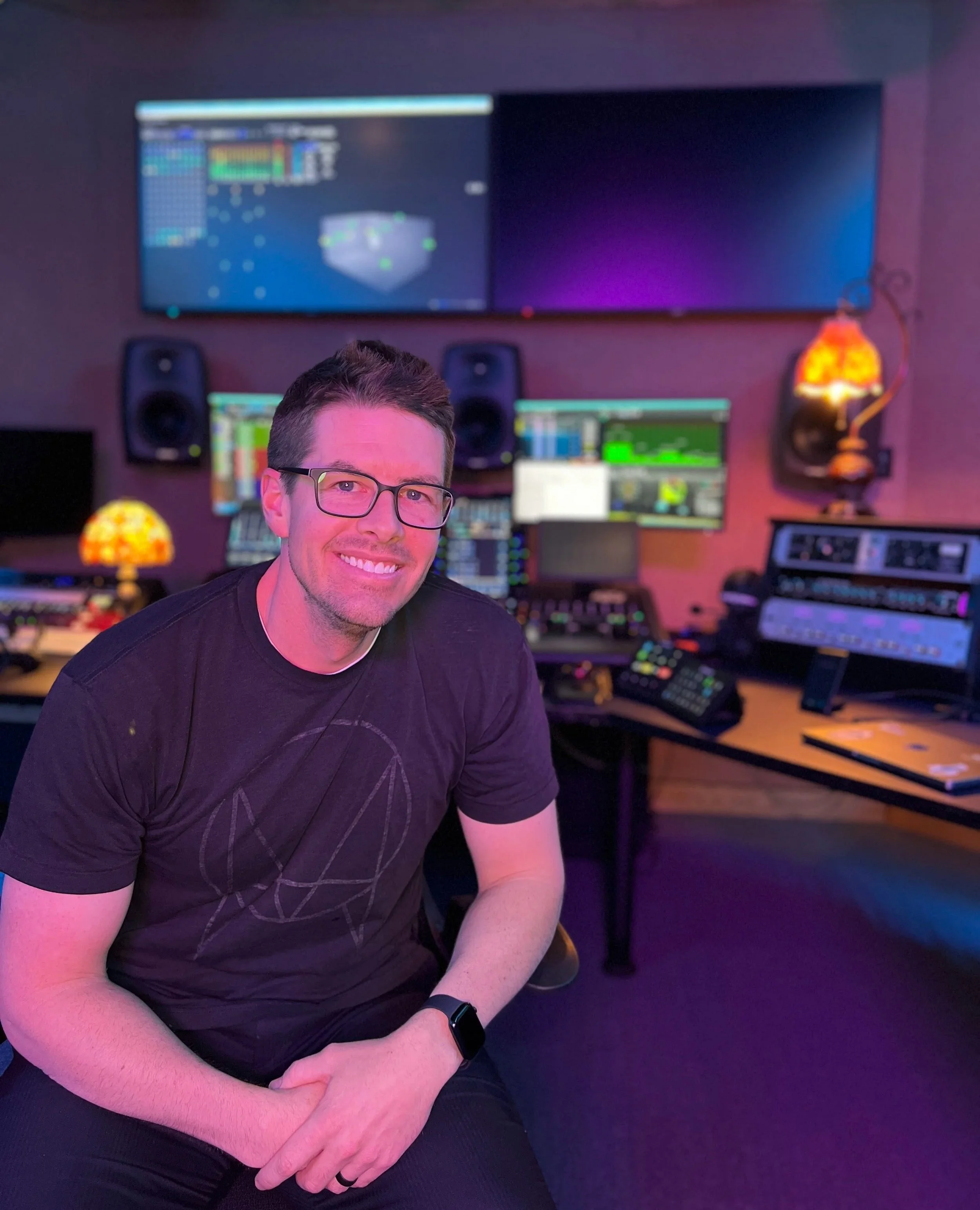
Andrew Law
“They’d expected outside engineers to book the room, but when artists requested Atmos and nobody showed, I said send it to me.”
How did you get into mixing in the first place?
I knew I wanted to be an engineer from about 14. I grew up playing piano, which wasn't cool, so I switched to guitar and played in bands through high school. I had a looper pedal, and some friends of mine wanted to record a rap album from beats they'd bought online. I didn't even like hip-hop, but I figured out how to loop about 500 megabytes of data across eight mono tracks and bounce the whole thing down. The problem-solving side of that hooked me completely, all the knobs and switches, basic delays and reverbs learned from guitar pedals applied to a recording system. I moved to Los Angeles for trade school at SAE and spent every spare hour there. My first job out of that was with Matt Testa, P Diddy's engineer, running sessions at a small studio in Hollywood. From there it was gig after gig, working for different engineers, learning constantly. I loved it.
And Atmos? Did someone put you onto it, or did a job land in your lap?
I'd heard about it before I ever heard a proper system. Right before the pandemic I worked at Deluxe Entertainment in Hollywood, now Pacific Standard Sound, as a Stage Engineer. I looked after speaker calibration, software, the machine room, all of it, across stages that were mixing Stranger Things and a run of films, all in Atmos. So I learned the technical side before I ever touched the creative side, which gave me a real foundation. I'd tinker on the systems in downtime, try some music, get a feel for how it behaved in a big room.
From there I moved to Amazon Music and Wondery, mixing audio fiction shows in Atmos, sound design, scoring, dialogue, narration. Because I had a music background, when Amazon Music was setting up their own Atmos studios and offering services to indie labels, I put my hand up. They'd expected outside engineers to book the room, but when artists requested Atmos and nobody showed, I said send it to me. For a couple of years I mixed all the indie work coming through those studios. No deadlines, no client breathing down my neck, just space to figure out my own workflow. It was genuinely fun.
That eventually led to a Grammy nomination, for DUCKWRTH's All American F**k Boy.
That one came through the Amazon Music team. The distribution company Stem had approached them, and asked if I would mix the Atmos. They sent over the stereo mixes to see if I wanted in. I heard the first two singles and thought, this is really cool, I want in on this. They sent the whole record, I spent a couple of weeks on it, sent it back, got approval, and that was that.
Was it attended, or did you just send mixes off blind? Did they give you free rein?
Completely blind. They sent the stereo files as individual printed tracks through the master bus, not stems, every element on its own with all the original effects baked in. I'd sent over a document beforehand about how I like files prepped, and having everything printed with the effects intact actually saves me from having to guess and rebuild what they'd done.
Did you get a brief?
Not really, and I think that's common on a first Atmos pass. It's an afterthought until someone hears the result, and then the second time round you get an actual conversation. For a first album it's usually just, have some fun with it, here's a couple of weeks, and the budget's zero. I was salaried, so that part didn't bother me. It gave me all of the creative options and none of the usual pressure.
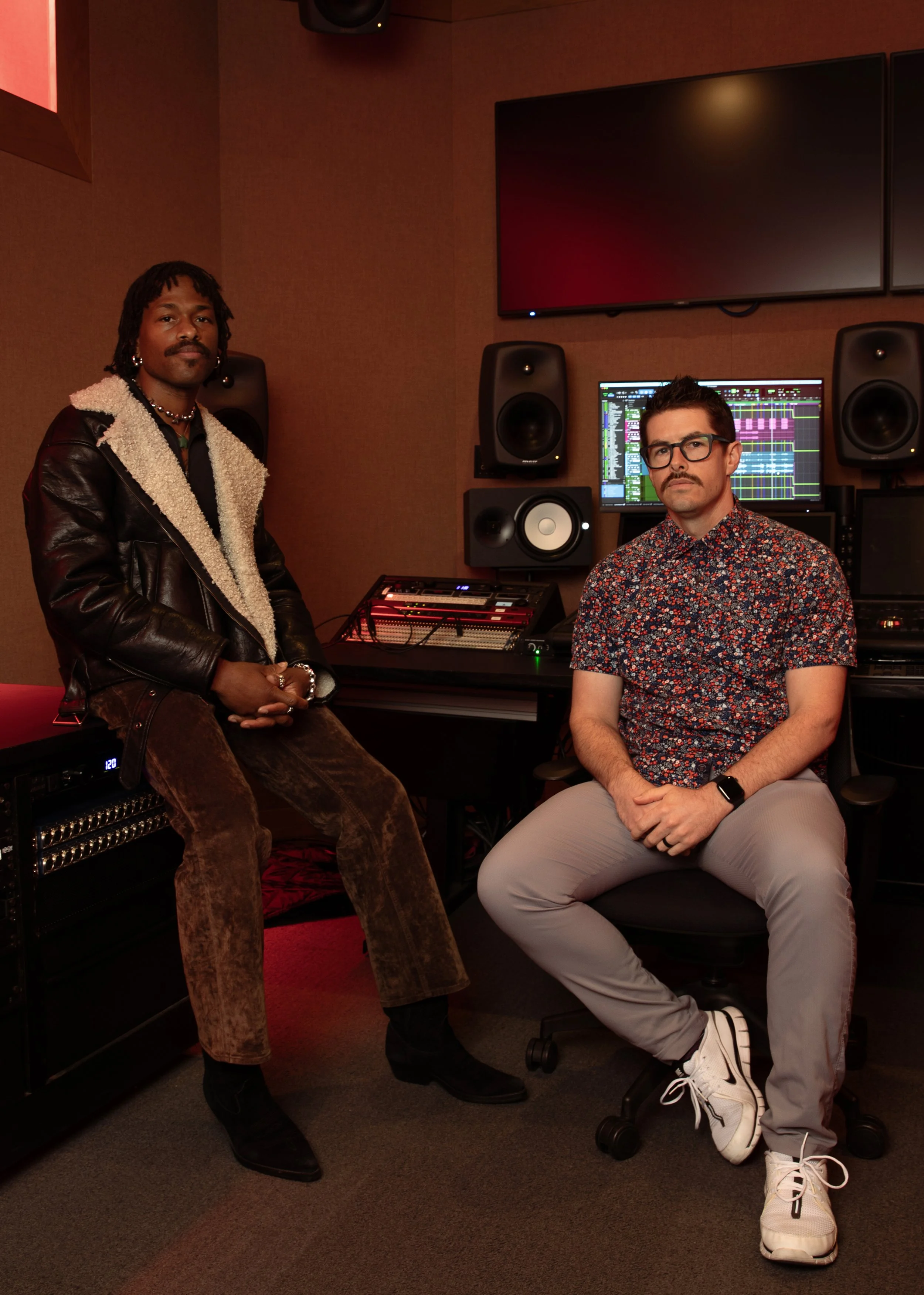
Andrew Law with DUCKWRTH
“Learn the process first. Understand what an ADM actually is versus an MP4, and how binaural fits into that. Once you understand your gain and loudness workflow, then look at how Immersive Master Pro slots into your exports and re-renders.”
So how do you approach a record with no brief at all?
I listened to the whole thing front to back first, a pre-release link, twenty-one songs including the narrative skits between tracks. There's an actor, LaKeith Stanfield, narrating, and DUCKWRTH is playing a character hanging around the studio while his girlfriend calls and he's dodging her for someone else. I got to place him inside a studio in the Atmos room, then have him walk out the door with the music thumping behind him. That kind of sound design is honestly the easier part of Atmos work.
And musically? What's your actual approach to the elements themselves?
The hard rule is matching the stereo image. If a guitar sits right in the stereo mix, it stays roughly on the right in Atmos, whether I push it forward, back, up or down. Spinning things around isn't really an option if the stereo pans left to right, you're working inside that constraint. Past that, I've got an aesthetic I like: big pads and strings behind the listener, rhythmic elements and drums up front. I also use the LFE and centre channel, which I know some Atmos mixers avoid on principle, but if the speakers are there, I'll use them.
I was in a session yesterday with the engineer doing all of U2's back catalogue remixes, and one thing that comes up constantly is the gap between the concept of Atmos and the reality of it. People expect to be surrounded by the music. The reality is a lot more restrained than that, isn't it? You can't just spin a lead vocal around someone's head.
You can, technically. But yeah, it's not the wide-open palette people imagine. You still stick to an aesthetic, the same as you would in stereo.
I find a vocal dead centre in the centre speaker a bit disconcerting, actually. I much prefer it spread across the front array. How do you handle that?
If I've got a dry vocal, I'll put it in the centre and then bleed a little into the left and right to widen it in the front. Most mixers avoid the centre channel entirely because we're all so used to phantom centre from stereo. One real problem with it: in a larger theatre, you get the Haas effect. Someone sitting off to the left will hear a true centre vocal as hard-panned left, and it throws off the whole image. So I'll usually put a little signal in the centre channel deliberately, to hedge against that.
“I showed [a friend] exporting MP4s and binaural straight out for label approval, checking gain one more time without having to sit through the album assembler for a whole day.”
At what point did you realize Atmos wasn't just a creative discipline, that there was a whole administrative layer underneath it? The ADM housekeeping that ends up taking as long as the mix itself.
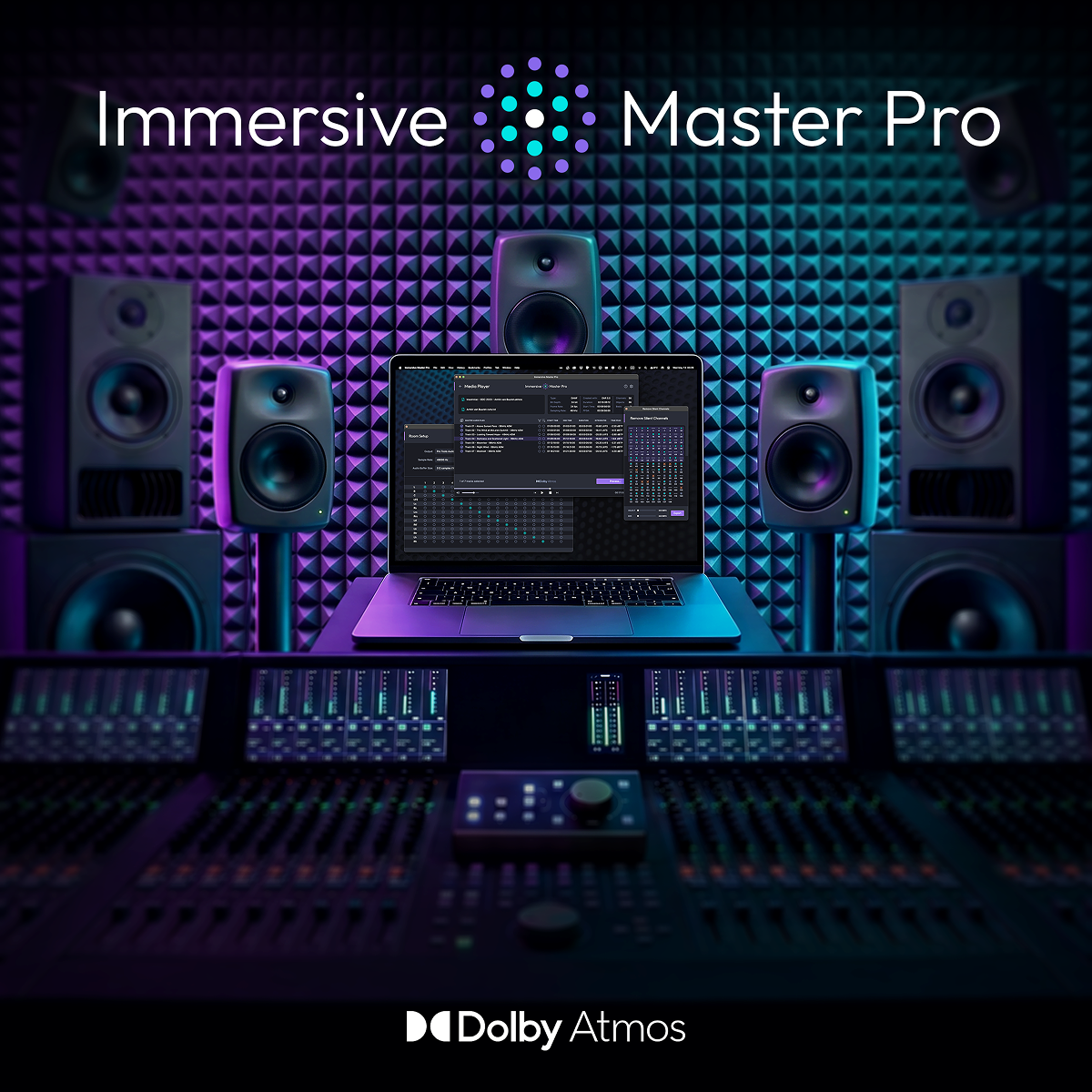
That was at Wondery. We'd finalise the ADM for one of our shows, export the MP4 for our platform, then have to send binaural versions out to producers who wouldn't touch the MP4 directly. For a long time the Dolby renderer was the only tool I had for any of that. When Immersive Master Pro came out, the first thing that caught my eye was loudness rendering speed. An hour-long show, seven episodes, checking loudness to spec in the renderer could eat three hours easily. With Immersive Master Pro I could batch-process the whole run and make adjustments after.
So you're using it in post as well as music. That's less common.
Definitely. And it matters more there, honestly, because I'm not the tightest re-recording mixer in the world. Plenty of guys hit spec on the way through and hold loudness steady across a whole episode. I tend to sit in the ballpark, minus 18 was our target at Wondery and Amazon, and across a forty-five minute show it can drift. I'd come off my NuGen VisLM at something like minus 16, print the ADM, run it back through Immersive Master Pro to check where I actually stood, then adjust the session accordingly.
How much time is that saving you?
It cuts that part of the job to about a quarter of what it used to take. Seventy-five percent less time, easily.
What are your favourite features?
Loudness measurement, without question. Silent object detection is genuinely useful too, I'll occasionally leave a couple of silent objects on an aux I've bussed something to, print it down, and get flagged by the DSP for it. Running the loudness pass shows me those silent objects immediately instead of finding out the hard way. I use the gain function less often, but if I need my export to match my session exactly, I can gain something down to spec right there rather than going back into the DAW. I've also used the batch trim and downmix more than once, including one job where a client wanted a 5.1 fold because he had a 5.1 setup at home. Exporting wave, MP4 and 5.1 together in one batch instead of running everything through the renderer individually was a real time-saver.
What would you tell someone getting into Atmos who's never even considered a tool like this?
Learn the process first. Understand what an ADM actually is versus an MP4, and how binaural fits into that. Once you understand your gain and loudness workflow, then look at how Immersive Master Pro slots into your exports and re-renders.
And an experienced Atmos mixer who's somehow never come across it?
It'll save them a lot of time, full stop. I had a friend over recently, using my studio and my speakers, and I mentioned I run everything through Immersive Master Pro at the end to QC loudness before delivery. He'd never heard of it. I showed him exporting MP4s and binaural straight out for label approval, checking gain one more time without having to sit through the album assembler for a whole day. That's the whole pitch, really.
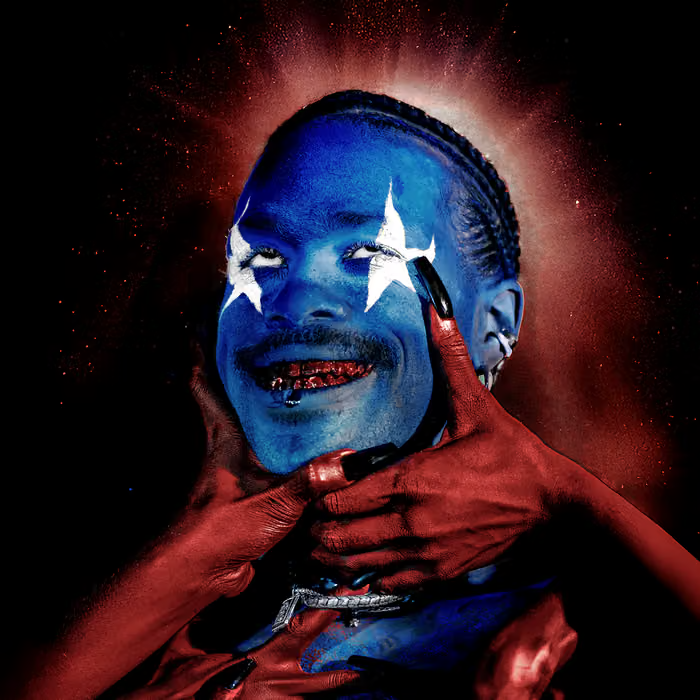
All American F**k Boy
DUCKWRTH
For more information, contact us at info@immersive-machines.com.
#immersivemasterpro #DolbyAtmos #immersiveaudio
Download a 30-day demo of Immersive Master Pro here.