Immersive audio insights: Katia Sochaczewska on listening beyond stereo
Immersive Machines’ Russ Hughes interviews immersive music pioneer Katia Sochaczewska. Katia is a full-time researcher at the University of York, and co-founder of the famed ECHO Project.
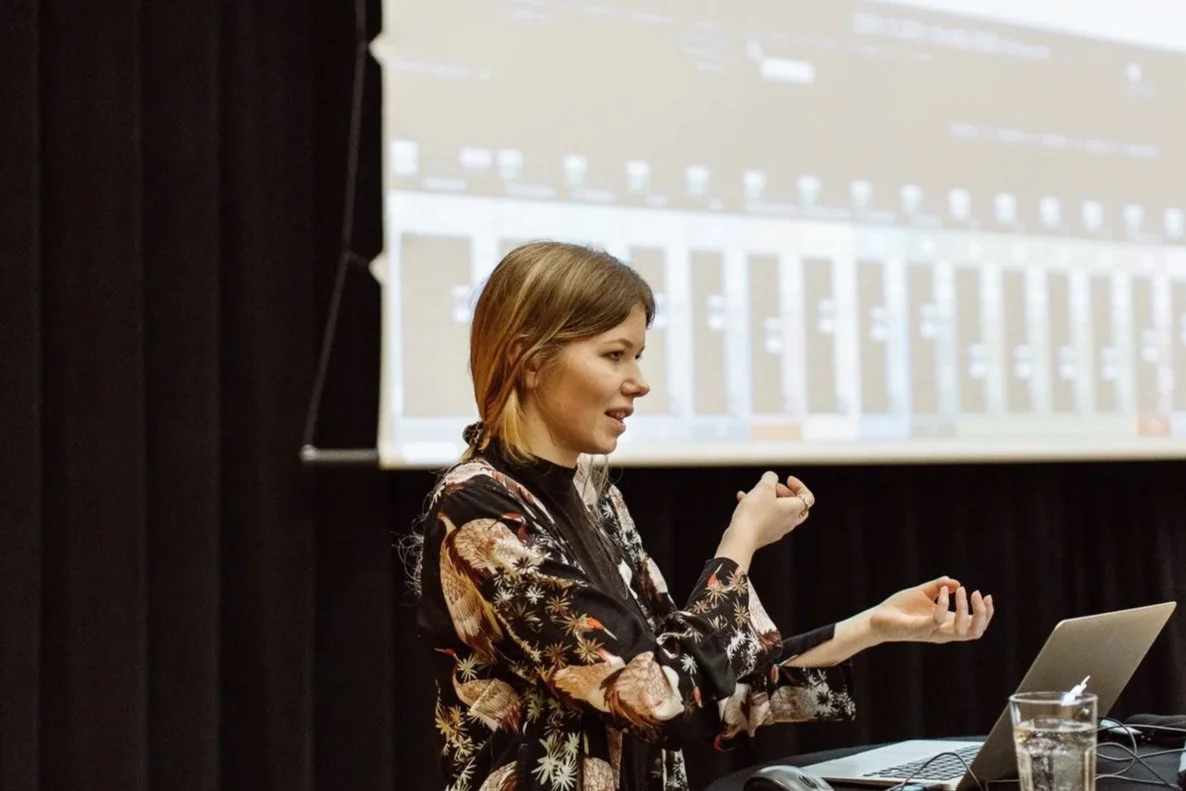
Katia Sochaczewska
“The first time I heard immersive music done properly, I knew there was no way back. Once you hear how enveloping that third dimension can be, it’s very difficult to forget.”
How did you first get into audio? Was it something you always knew you’d do?
No, not at all. “Neither of my parents were musical,” Katia says. “I went to music school and played piano, but I was also always drawn to maths and physics. I wanted to understand what was going on behind the scenes.” That combination eventually led her to study acoustic engineering in Krakow. It was there, during a late-stage project on immersive production, that her interest in what sits beyond traditional stereo really took hold. “The first time I heard immersive music done properly, I knew there was no way back. Once you hear how enveloping that third dimension can be, it’s very difficult to forget.”
Was your first encounter with immersive audio through binaural work?
Yes. Katia started with binaural recordings of acoustic ensembles as part of her degree. “I was trying to enhance sources that felt masked or buried by distance, experimenting with perception,” she explains. From there she moved on to Ambisonics, intrigued by its expressive possibilities. “With binaural, you’re capturing real spaces. With Ambisonics you can do both - capture the soundscape or synthesise it, or mix both together, blend realism and abstraction.”
What is it about immersive audio that captured your imagination?
“It’s the focus it demands,” Katia says, trying to put into words something that goes beyond technical vocabulary. “Immersive audio forces you to be present. There’s more going on, and if it’s done well it really pulls you into the space the artist is creating. Whether that space is real, imagined, or somewhere in between, it changes how you perceive the music.” She pauses, then adds, “Even now, talking about immersive tracks that I love gives me goosebumps. It can be an intense experience.”
The early days of mainstream spatial releases were a bit messy. What do you think went wrong?
Katia is cautious, but clear-eyed. “It’s important not to be too harsh on the early days,” she says. “Platforms needed content, and upmixing existing stereo tracks was the only scalable way to get that.” But that created confusion. Listeners more often than not do not know if they are listening to a genuine immersive work or a poorly conceived upmix, and that undermines the value of the format. “If someone listens and thinks, ‘I’m not sure I prefer this,’ that’s dangerous. That’s when people start questioning why this format exists at all.”
Are there common mistakes you see people making when they first approach immersive mixing?
“Yes,” she says, “and the biggest one is thinking it’s just a technical step at the very end of the process.” For Katia, immersive mixing isn’t something you tack on after the fact. “An upmix and a true immersive mix are not the same. A real immersive approach starts with the composition and continues through recording and production. The spatial decisions are part of the music, not an extra filter.”
Does that mean some genres suit immersive audio better than others?
She thinks so. “Absolutely. Acoustic and orchestral music often already have space built into them. The room becomes part of the instrumentation." She points to organ music as a classic example: the sound is inseparable from the environment it occupies. Conversely, she sees a frontal, band-centric soundscape — typical of a lot of rock and metal — as less about immersion and more about presence. “Expecting everything to work the same way spatially is not realistic. Different genres have different needs and create specific production opportunities.”
Do you see applications for immersive audio outside of music?
Definitely. She highlights projects involving environmental and landscape recordings used in settings like hospitals or waiting areas. “We have the means to capture full 360-degree soundscapes. Bringing immersive calming nature into spaces associated with stress or discomfort has real potential. There’s research unfolding around immersive sound in a wellness context, and I think it will grow.”
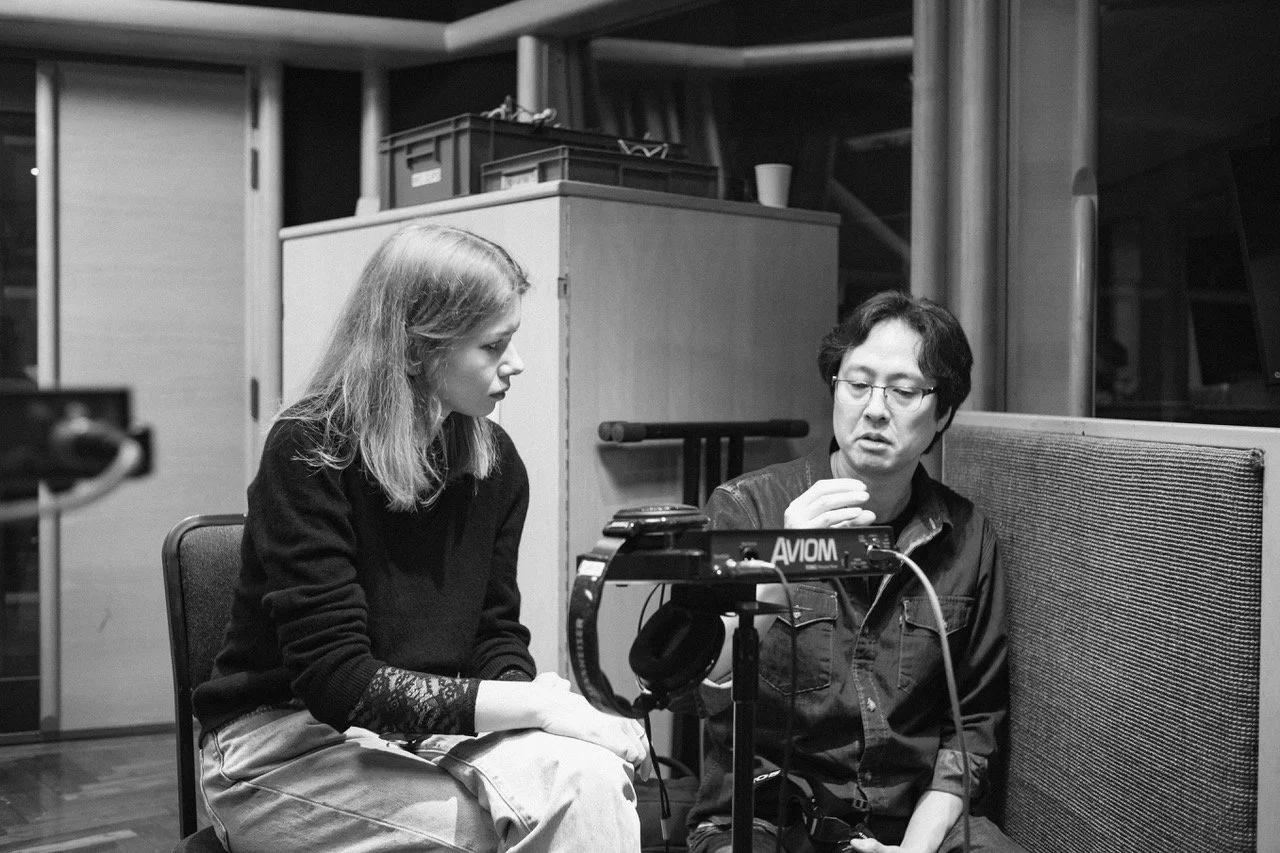
Katia Sochaczewska and Hyunkook Lee
You work at the intersection of research and creation. Does psychoacoustics inform your practical decisions?
A lot. “Human perception isn’t arbitrary,” she says. “For instance, the area behind our ears is evolutionarily a danger zone. When something happens there, it can trigger a stronger response.” She applied that insight in a horror soundtrack recently, using spatial placement to exploit deeply embedded instinctive reactions. “You’re tapping into mechanisms that evolved over millennia,” she says. “Psychoacoustics can be a powerful tool when used with intention.”
“We were dealing with huge numbers of files. Loading them one by one wasn’t feasible.” Immersive Master Pro became essential. “To be honest, I don’t know how we would have managed without it.”
When did you first encounter Immersive Master Pro, and how did it fit into your work?
Katia first used it while preparing an ECHO Project resource - a database of immersive orchestral recordings that involved multiple microphone arrays of different pieces, different musicians layouts, resulting in hundreds of ADM files. “We were dealing with huge numbers of files. Loading them one by one wasn’t feasible. We needed to check if all of the files conform to our predetermined specs, and create multiple rerenders quickly.” Immersive Master Pro became essential. “The batch processing alone helped us to meet the deadline with releasing the database. To be honest, I don’t know how we would have managed without it.”
Now that workflows have become more accessible, do you think tools like headphone spatial monitoring have helped the cause?
Yes, but she is also measured in her take. “Headphones have lowered the barrier and made immersive work more accessible, and that’s great,” she says. However, she still advises checking mixes on speakers. “There are things you won’t catch on headphones, especially in the low end or with phantom centre behaviour. It’s helpful, but speakers shouldn’t be completely replaced.”
There’s talk about open formats and new ecosystems like the work done by the Alliance for Open Media. What’s your view there?
She’s optimistic. “What’s encouraging is that it isn’t one company or one platform trying to define everything. You have content creators, technology companies, and academic institutions collaborating. That ecosystem approach gives it a better chance of sticking around and accommodating needs from different parts of industry.” She emphasises that distribution and consumption are just as important as production.
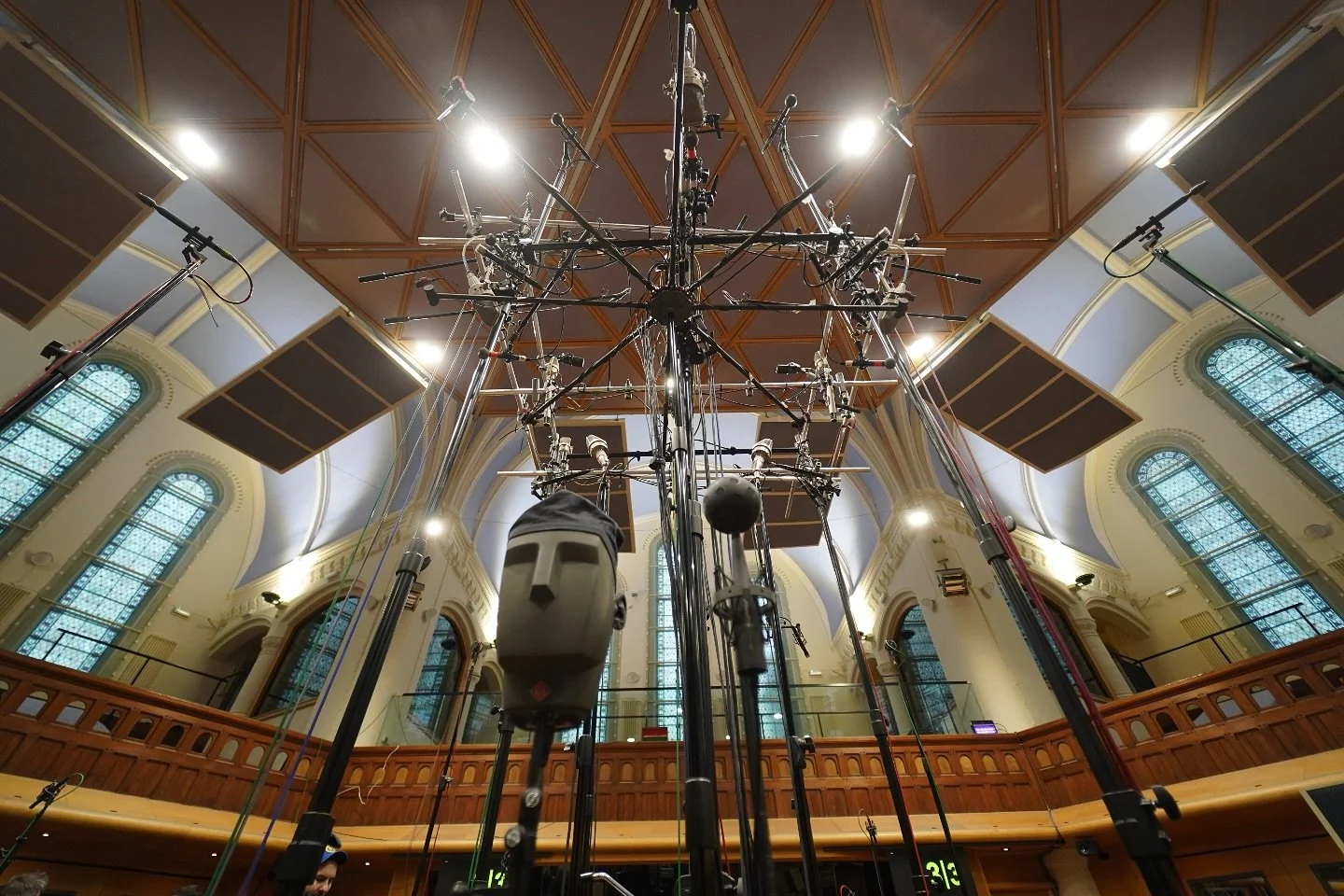
From the ECHO recording session at AIR Studios in London on 17 Dec 2024.
After more than a decade in this field, what keeps you energized about immersive audio?
For her, it’s the sense that the groundwork has finally been laid and the creative possibilities are opening up to more and more people. “For years, we were building infrastructure. Now artists can build on top of that in meaningful ways. There’s still work to be done, for instance I believe we can significantly improve binaural rendering, but an increasing number of intentional immersive content is being made and we are finding ways to deliver it to the listeners. And that’s what matters.”
Is it fair to hope for a point when we stop talking about immersive audio as something special and it just becomes another part of how music is made?
“That would be great,” she says. “I’m looking forward to the point where it’s not a buzzword anymore, where it’s just part of the language. And then we can ask what comes next.”