
Samsung Soundbar vs. Sony Quad
How Do Consumers Hear Immersive Mixes?
Mixing music in Dolby Atmos in a good studio is so much fun and so captivating that many mixers, myself included, waved away the practical questions about how well this multidimensional sound would actually be heard by consumers. I’m guilty of the “sounds great in a car!” or “lots of people have home theater systems!” comments in front of artists or clients. But truthfully, it sounds great in new high-end cars, and the number of people with real, well-maintained home theater systems with separate amps and speakers and a proper Dolby Atmos receiver is pretty small.
So in reality, we’re left with soundbars. Soundbars occupy that middle space between built-in television speakers and proper home theater systems. The first time I heard the Sennheiser Ambeo and the early Sonos soundbars, I didn’t love them, but I heard their potential. And I kept listening every chance I could when I walked into an electronics store or visited a friend who had one. Soundbars depend on the acoustics of small and medium-sized living rooms to perform their magic, which makes auditioning them in typical electronics stores, with their gymnasium-sized spaces and constant ambient noise, very challenging. After a lot of listening, I settled on the Sony Bravia Theater Quad for my living room. High-end enough that I, the snobby audiophile, wouldn’t hate it, but also typical enough that I could hear how my Dolby Atmos mixes would translate to home listening.
Just recently, in preparation for an Immersive Machines event in New York, I had a unique opportunity to set up Samsung’s flagship soundbar in my living room, too. While the $300 soundbars out there are a big improvement over built-in television speakers, the quality jumps up a lot when you get to the price range of the flagship Samsung HW-Q990H at about $1700 USD, and the flagship Sony Bravia Theater Quad at about $2300 USD. I connected identical Apple TVs to each soundbar, placed the speakers for each system next to each other, and listened to a wide variety of albums and movies. Some of these albums I mixed, so I knew intimately how the lossless ADM file sounded in the studio, and many of the albums were recent releases noted for their use of the Dolby Atmos soundfield. Spoiler alert: both of these systems sound good. And they should- they’re at the top end of the soundbar price range. They have a big, dynamic sound. You can clearly hear Dolby Atmos objects moving through space, and the frequency response feels pretty even, which is a testament to their bass management systems. But in many areas, Sony and Samsung take quite different approaches. So let’s get into the details.
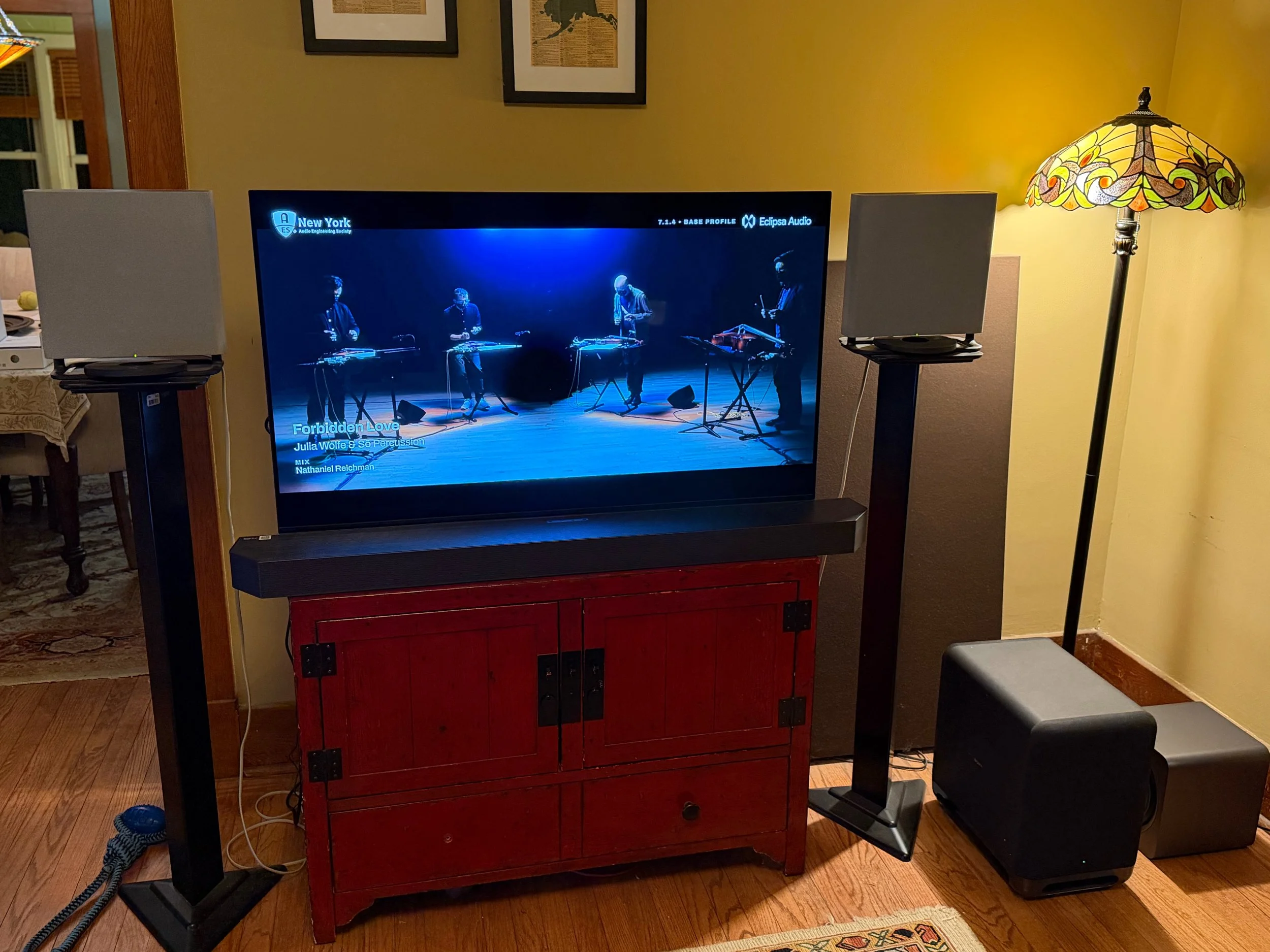
Two of the Sony Quads, the Samsung soundbar, and their respective subwoofers in my living room. Not pictured are the pairs of rear surrounds for both systems.
Samsung’s Apples to Sony’s Oranges
Fundamentally, these systems are examples of two different paradigms. The Samsung is more conventional, with a wide, low profile and heavy slab of speaker drivers that sits under your TV screen. The system has a subwoofer and two surround speakers meant to be put on stands in the rear surround positions. The Sony eschews the center slab of speakers and uses four square panels, each filled with speaker drivers, that can be placed freely around the room. The best locations are left and right of the TV and, somewhat counterintuitively, in side surround speaker locations. I tried the rear pair in rear surround locations, but the staging was better on the sides.
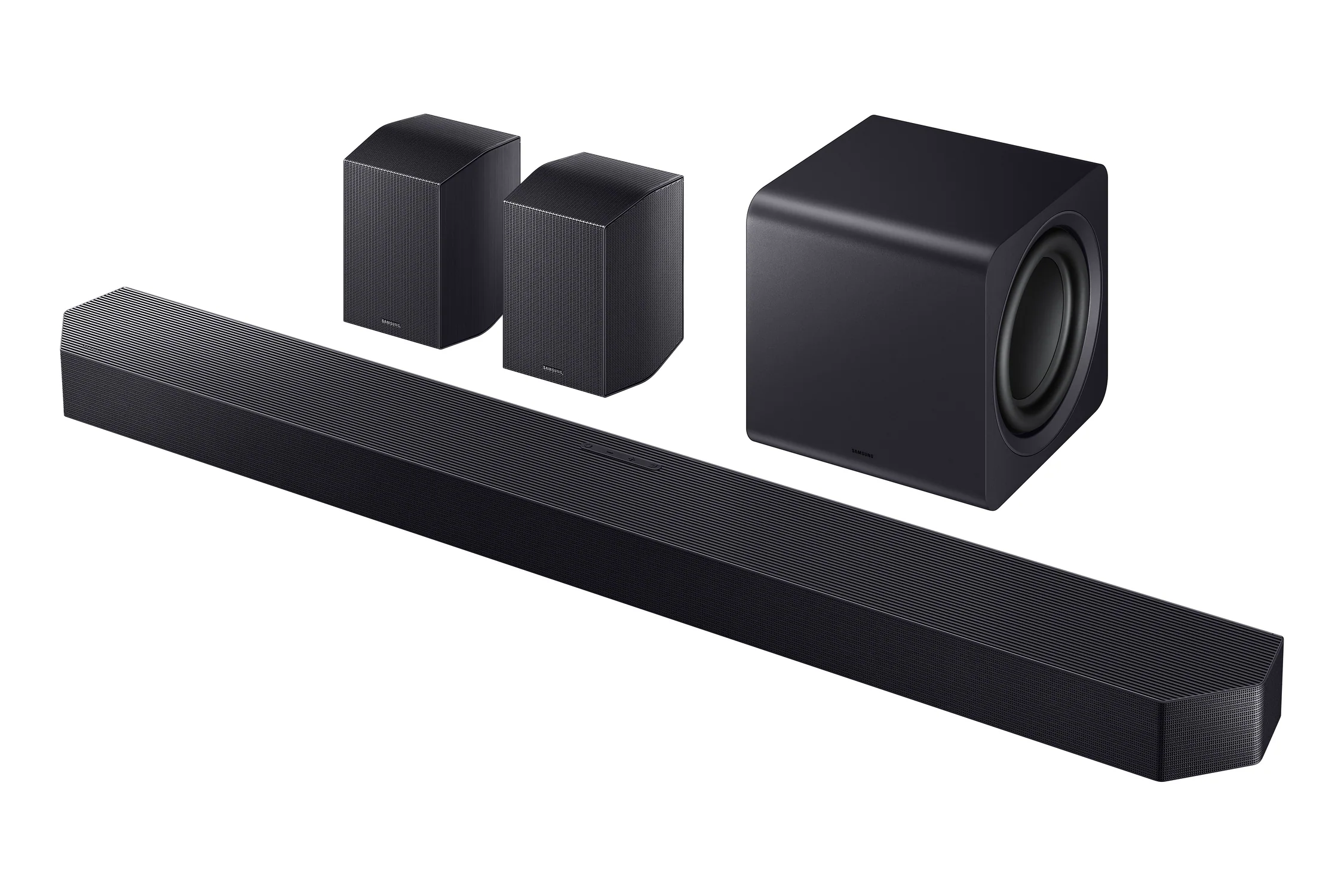
Samsung’s HW-Q990H system has one soundbar, one subwoofer and two rear surrounds
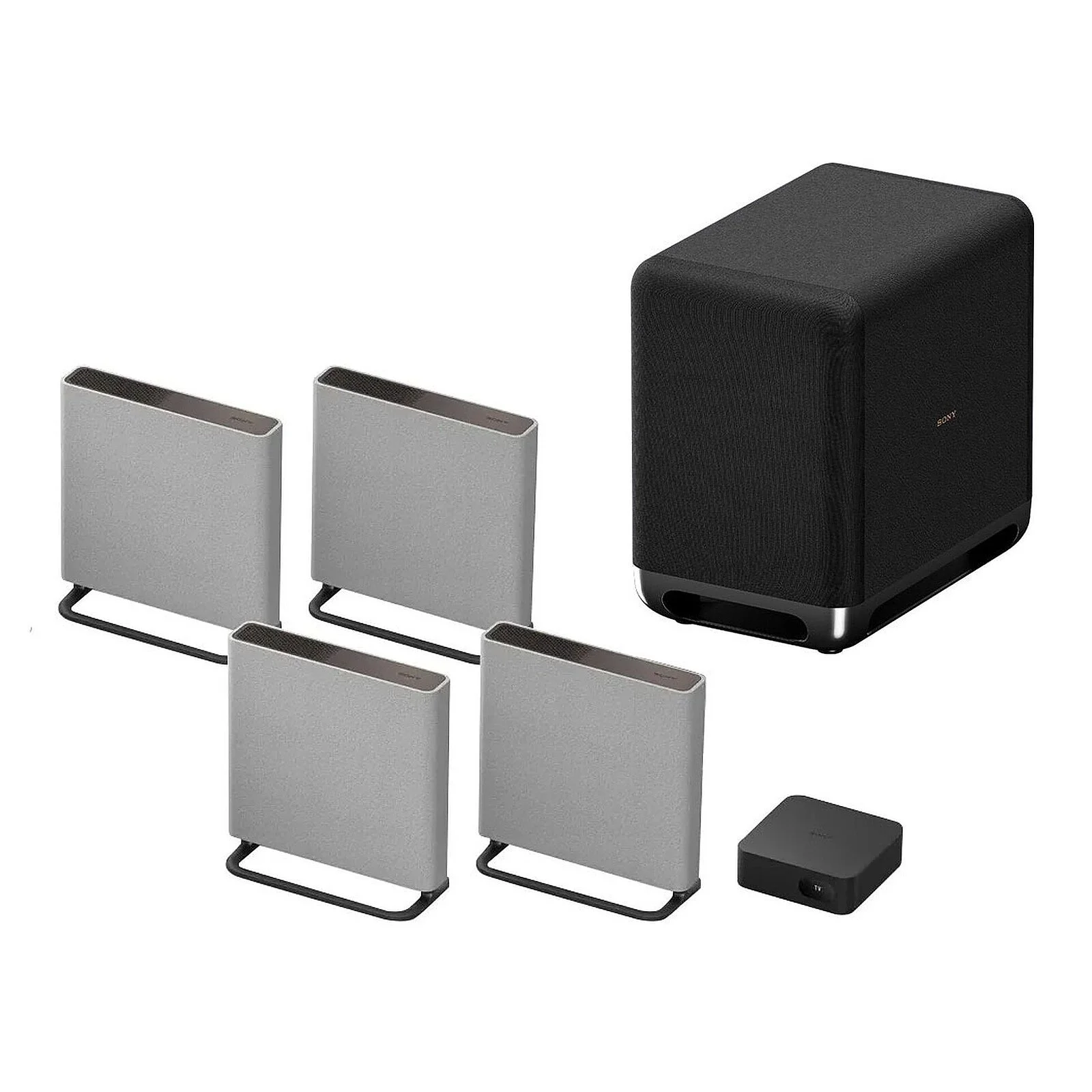
Sony Bravia Theater Quad consists of four panels, a subwoofer and a wireless control box.
“Spoiler alert: both of these systems sound good. And they should- they’re at the top end of the soundbar price range.”
Center Channel
I’ve been watching TV on the Sony Quad for a couple of years now and have grown accustomed to its “virtual” center channel. The voodoo in the Sony Quad is that it uses the four panels to create “virtual” channels in space where there isn’t a physical speaker. Watching the same TV show on the Samsung, which features a real center channel, demonstrated what I’d been missing. The body and timbre of actors’ voices were more natural on the Samsung. While the Sony Quad tries admirably to get that physical connection going to an actor’s lips, the Samsung wins here. (Note that the Sony Quad has a feature where you can use the speakers in a connected Sony Bravia television as a real center channel. I have a Bravia television, tried it, and ironically, it sounded worse than the virtual channel. This probably says more about the built-in TV speakers than anything else.)
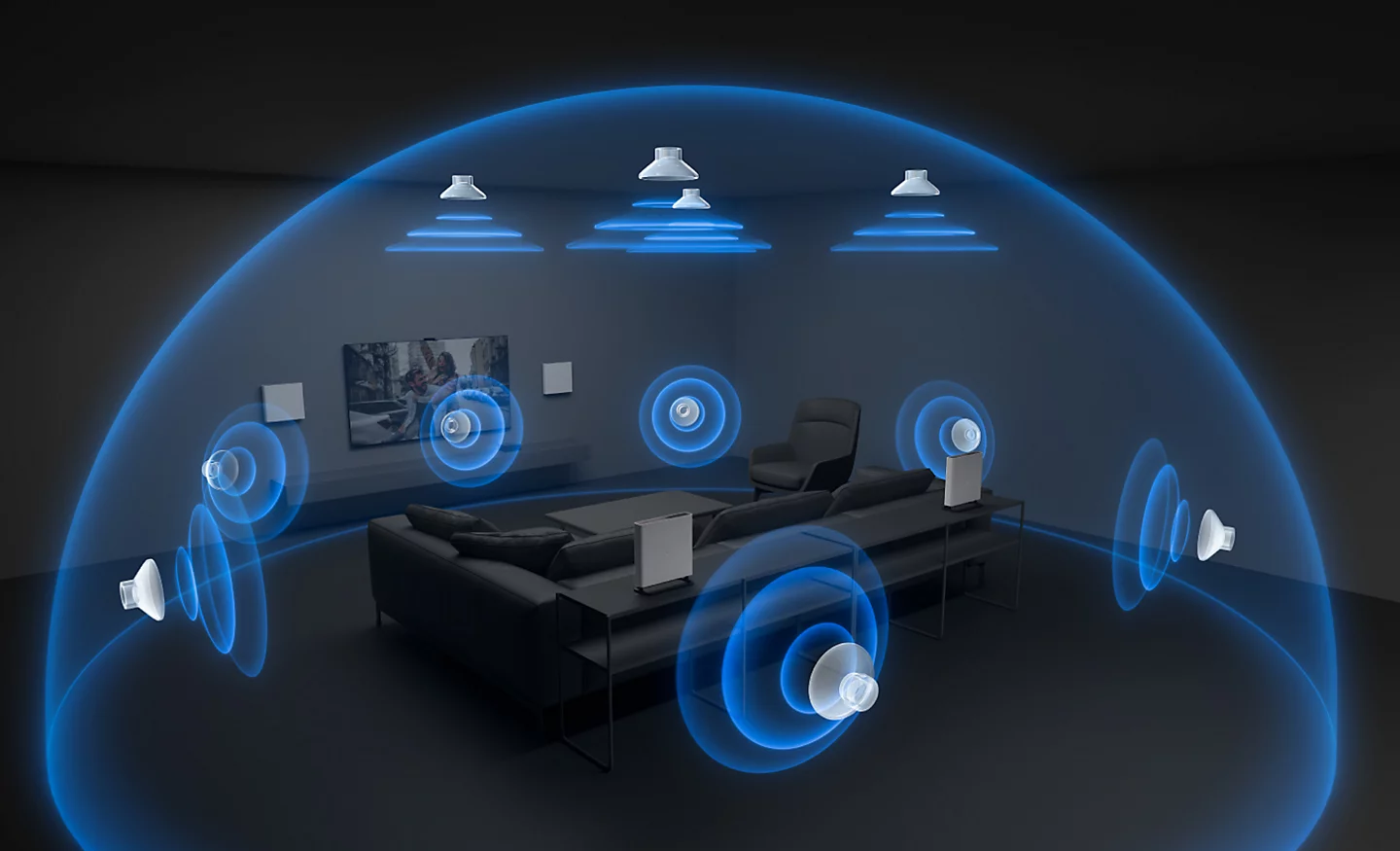
Sony Quad’s “virtual channels” as depicted in their marketing materials.
Surrounds and Heights
Both systems fill the room with surround sound, but when you play test signals (see my favorite album, “Functional Testing” by Dolby Labs) out of each channel in the 7-speaker plane, the distinction between a side surround and a rear surround is weak. I was surprised Sony Quad didn’t do better with this distinction since I can clearly hear objects flying around the room on Sony Quad. But test signals that move from Ls to Lrs, or Rs to Rrs aren’t super well-defined.
Reproducing height channels is the real party trick here. Both systems are capable of bouncing sound off the ceiling in a highly directed manner that really does make it sound like a proper height channel. It’s a bit washy, but it’s unmistakable. And if your mix features a guitar solo flying around the ceiling, or a startling office PA system (think Apple TV’s Severance) coming from a height channel, the effect will be heard pretty well. I actually think there’s better distinction on both systems between Ltf/Ltr than there is between Ls/Lrs. Totally ironic, because 7.1 sound was a precursor to 7.1.4 sound.
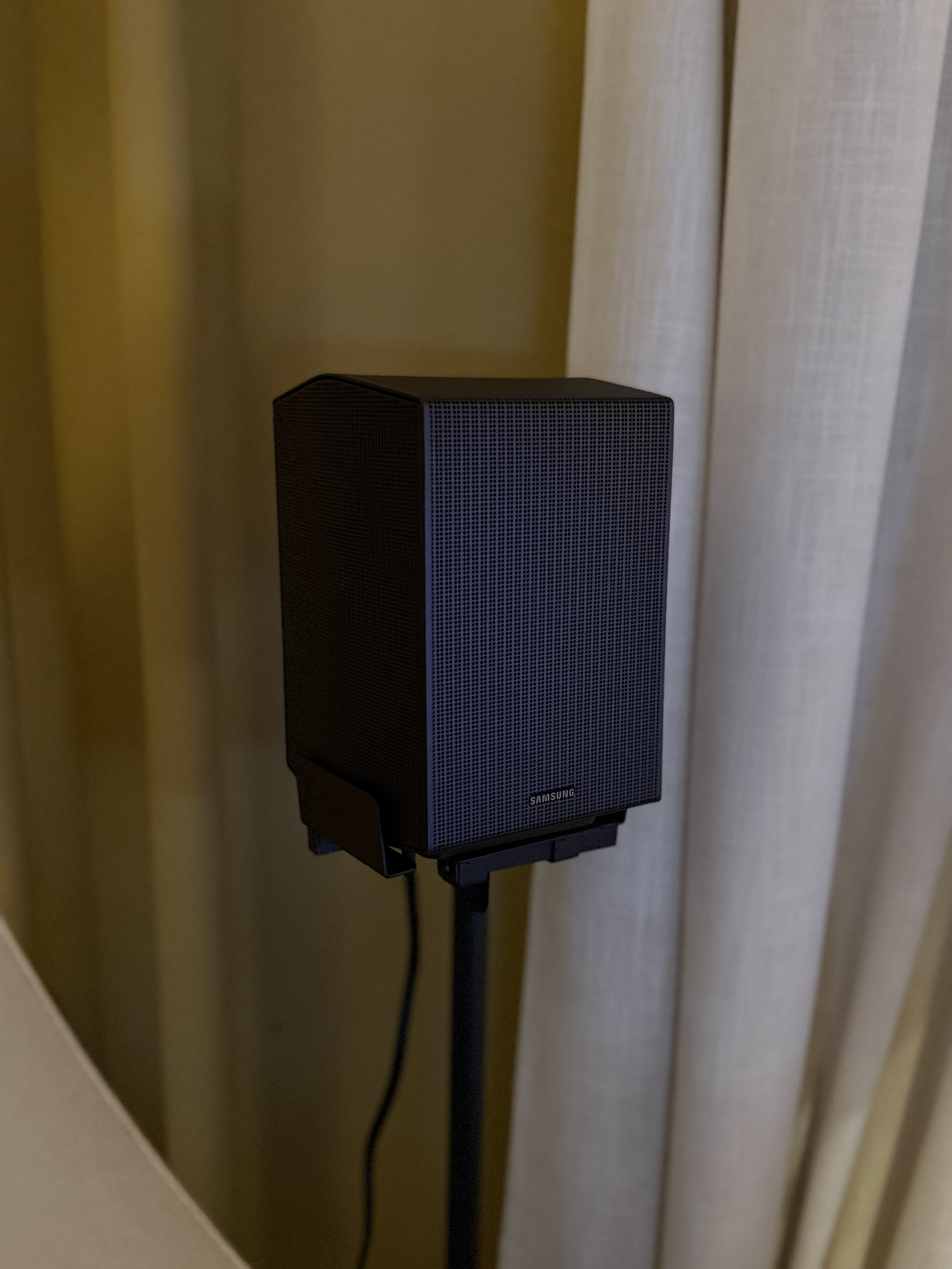
Samsung gets a ton of performance out of their unassuming rear surround speakers.
Sound Bubble
What the Sony Quad lacks in center channel clarity it more than makes up for with the coherent “360-degree” bubble of sound that Sony advertises. In an active immersive mix, it’s pretty hard to locate the Sony Quad speakers with your eyes closed because the soundfield wraps around you in an almost gapless, circular way. One of my kids put on their favorite album and marveled at the sound and said “It sounds so wide!” The Samsung sound-field is unquestionably all around the listener, but it’s a little uneven in the sides and less magical than the Sony Quad.
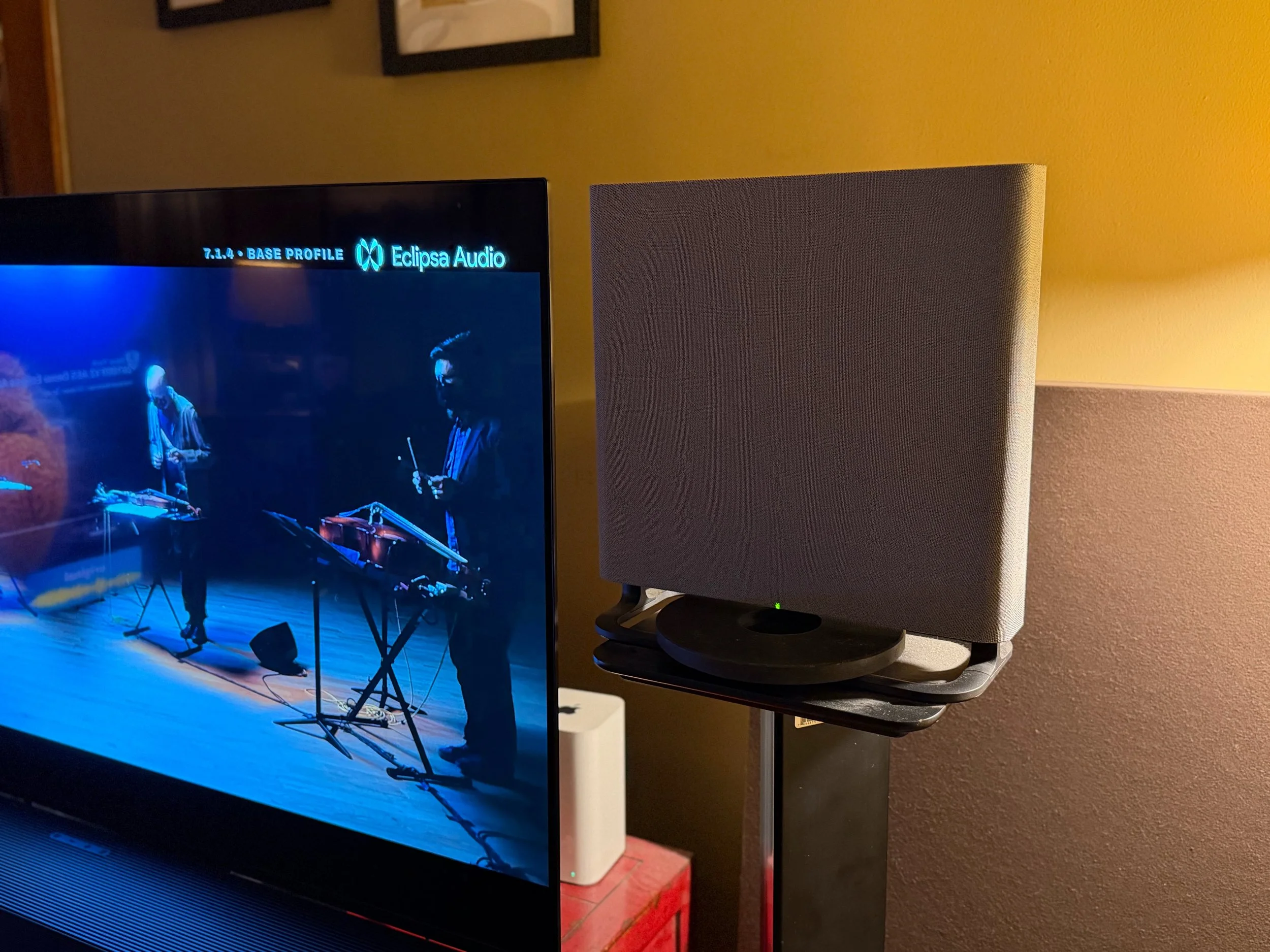
A misleading picture: the Sony Quad doesn’t play Eclipsa Audio, though it excels at Dolby Atmos.
Tone Color
This is where these soundbars really struggle when you compare them to studio loudspeakers from Genelec, PMC, Neumann and the like. You do get a wide frequency response and good dynamics with soundbars, but when it comes down to it, the drivers sound flimsy and boxy compared to a studio driver. The tweeters are cheap, the cabinets aren’t big enough, and the subwoofers move in a mushy way. All that said, the Samsung surprised many New York engineers when we put it in the studio.
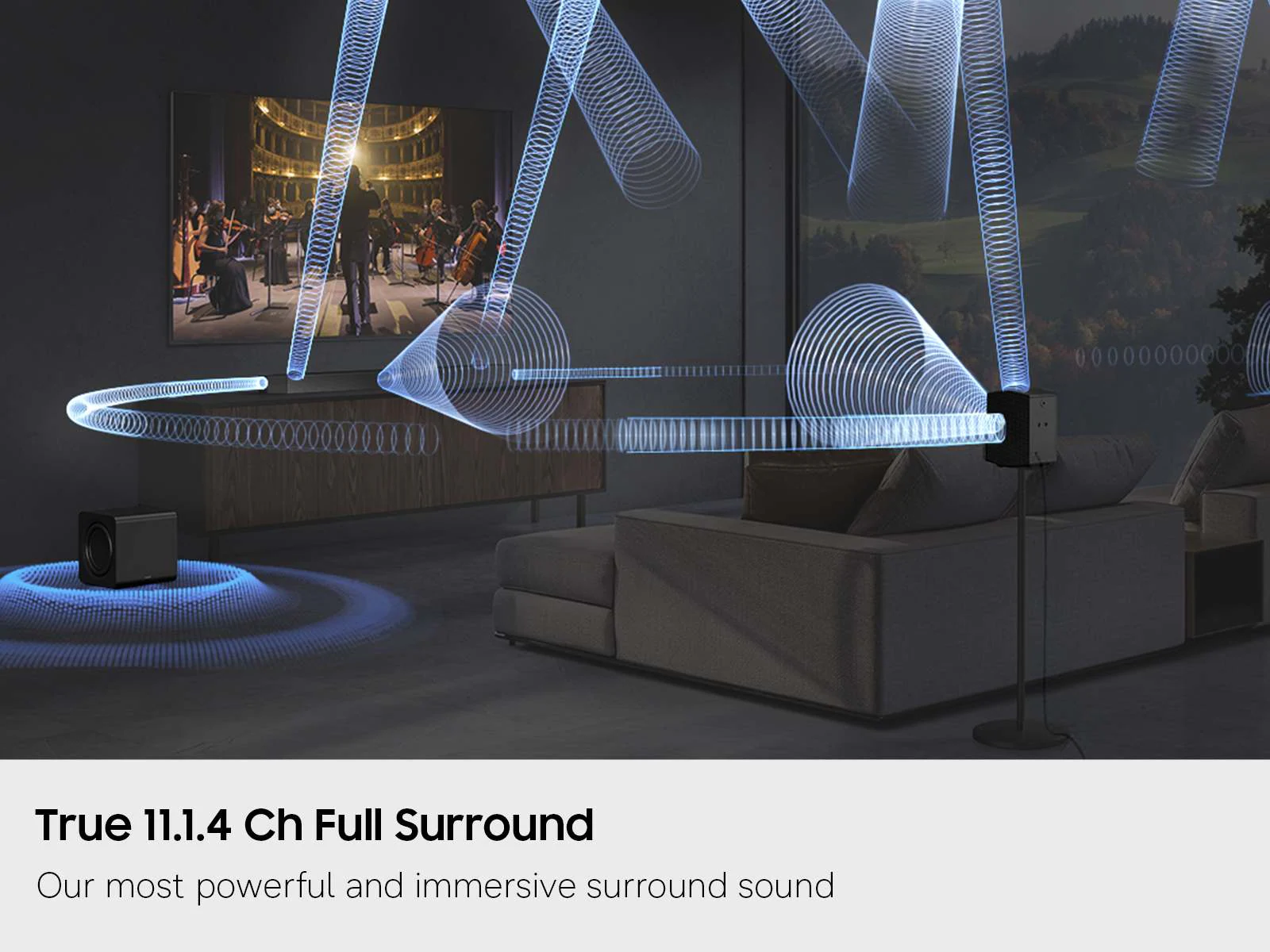
Samsung’s “11.1.4” sound shooting around a living room as depicted in their marketing materials.
Staging and Subwoofer
Naming the system the Sony Bravia Theater Quad was probably no coincidence or bit of marketing hype. I have no inside info, but I think the word “theater” is in the name because of the response curve and dynamics. Film mixers will be the first to point out that sound moving through all the air in a big theater is a large contributor to the classic “cinematic” sound. Real theatrical sound can get quite loud, but is rarely abrasive in the way that near-field studio monitoring often is. When you turn up Sony Quad, the system simulates that expansive theatrical quality. Sony Quad can get very loud, but it’s a pleasant, non-abrasive loud that accommodates monster soundtracks like Dune or Top Gun: Maverick. The Samsung has plenty of headroom, but will start to sound a bit more shrill in the front as the level goes up. Big bass moments in a film soundtrack are delivered with more dimension by the Sony subwoofer. The Samsung subwoofer is powerful, but it doesn’t deliver the expansive bass I was hoping for.
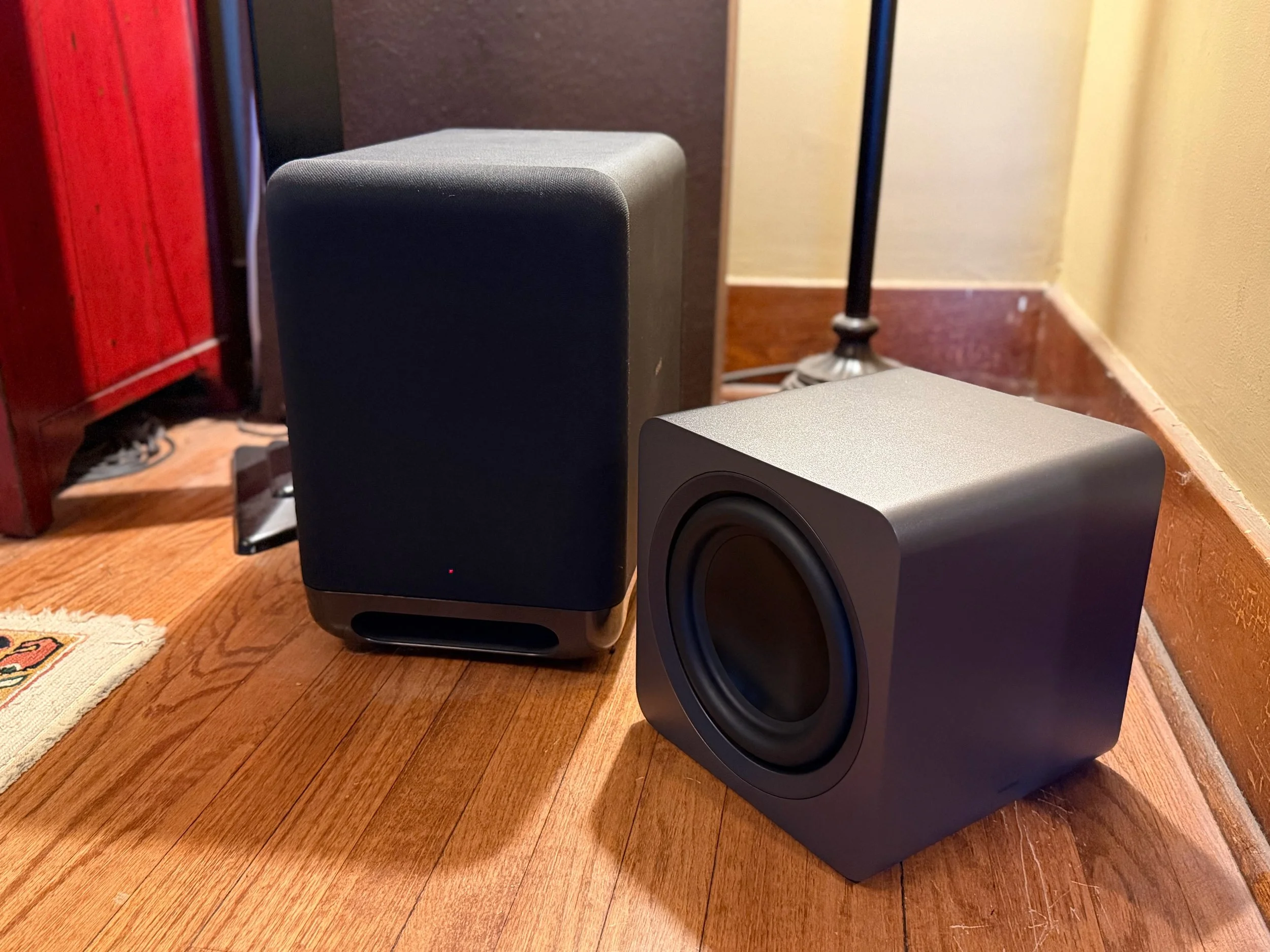
Sony’s subwoofer on the left and Samsung’s on the right.
Stereo
What about your pre-2021 record collection? All of those stereo albums from the past that you want to hear? Somewhat depressingly, stereo was no contest. The Samsung does not play stereo music well. It sounds boxy and the stage is narrow. Sony Quad sounds quite good and open with stereo. And if Sony were to sell the system as a 2.1 package (which they currently don’t), I would recommend it to home listeners. Admittedly, Sony Quad cheats a little with stereo because it has a subtle upmixing algorithm running when playing 2.0 content. I usually dislike the sound of upmixing, but this execution is tasteful and worth embracing.
Conclusions at Home
Film dialog and pop music vocals in the center channel had more clarity and body on the Samsung. The lack of a center channel hurts the Sony. However, classical music sounded much better on the Sony. The tinniness of the Samsung was revealed in the strings and winds of many well-recorded classical albums. The opening of Top Gun: Maverick had more powerful and better-defined bass on the Sony, but dialog sounded better on the Samsung. Dimensional ambiences in the soundtrack felt more enveloping on the Sony.
“If you’re watching television on the built-in speakers, stop reading, go to the store and buy literally any soundbar. You don’t know what you’re missing.”
My purchasing advice is the following: if you’re watching television on the built-in speakers, stop reading, go to the store and buy literally any soundbar. You don’t know what you’re missing. But between these two, my recommendation is that if you mostly watch television, buy the Samsung HW-Q990H. It has an amazing price/performance ratio, and plays the emerging Eclipsa Audio format in addition to Dolby Atmos. But if you have an Apple Music subscription and you love watching television and listening to music in your living room, get the Sony Quad. Sony Quad doesn’t support Eclipsa Audio, but the vast majority of immersive content out there is in Dolby Atmos, which the Sony excels at decoding. And finally, the Sony’s lack of a center channel is more than made up for by a truly excellent and musical soundstage.
Mixing on a soundbar?
If you’re wondering about using one of these soundbar systems to mix on, I don’t recommend it. They’re remarkable, but they aren’t professional loudspeakers and it would be a struggle to make critical decisions about the way a vocal sounds, or where something should be panned. But if you insist on trying, here are some technical pitfalls: in my limited experience, you can connect a computer with Pro Tools to a soundbar via HDMI. But you won’t get enough channels for Dolby Atmos. For unknown reasons, Apple has capped the total available channels from Core Audio over HDMI at eight, so you might get 7.1 if you’re lucky, and often you’ll get 5.1. The Dolby Atmos MP4s that I’m fond of playing on soundbars via a USB stick go through an offline encoding process that can’t be run in real time, so you’ll probably never get access to height channels over an HDMI cable. Apple Silicon Macs and most PCs can do a DD+JOC bitstream passthrough so you can play Apple Music correctly, but the Pro Tools Playback Engine can’t encode to that bitstream. That said, it can be useful to connect a computer to a soundbar to run custom test signals.
Samsung Soundbar vs. Engine Room Audio’s Loudspeakers
“Yes, we are comparing one speaker system that costs fifty times more than another. The absurdity of this comparison is not lost on me.”
Having compared the Samsung HW-Q990H soundbar to the Sony Bravia Theater Quad sound system in my living room, I began to wonder, what I would hear if I took the Samsung soundbar to a studio and compared it to a professional 7.1.4 loudspeaker system? A week later, I had that opportunity when AES New York, Immersive Machines and Engine Room Audio hosted their annual event. This year, the focus was on Eclipsa Audio, which is the new, open-source immersive audio format (more info on the Eclipsa Audio format here). A number of great producers and engineers gave me 7.1.4 versions of recent mixes that I could feature at the event. I made identical playlists in Pro Tools and YouTube and calibrated and level-matched both systems so attendees could switch between them in the same room:
Engine Room Audio’s Augspurger/PMC 7.1.4 system. Pro Tools and a MTRX Studio feeding new Augspurger LCRs, combined with PMC surrounds and heights, calibrated by a Dolby technician, running PCM audio at 48KHz.
Samsung HW-Q990H soundbar, subwoofer and two surrounds, with YouTube playing Eclipsa Audio in 7.1.4 via the Opus codec, mostly default living room settings.
(Yes, we are comparing one speaker system that costs fifty times more than another. The absurdity of this comparison is not lost on me.)
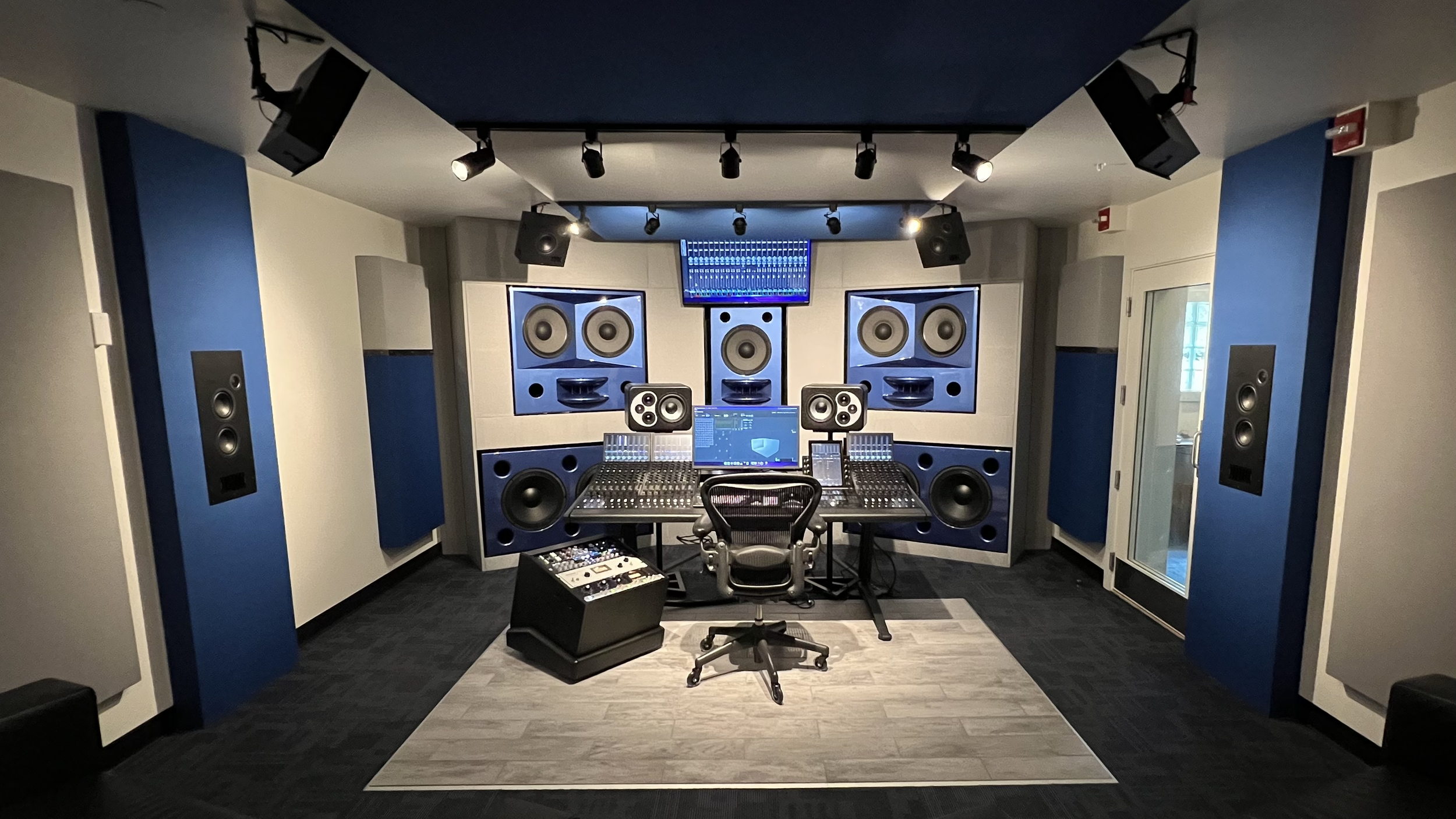
Engine Room Audio’s New York City Augspurger/PMC 7.1.4 flagship mix room
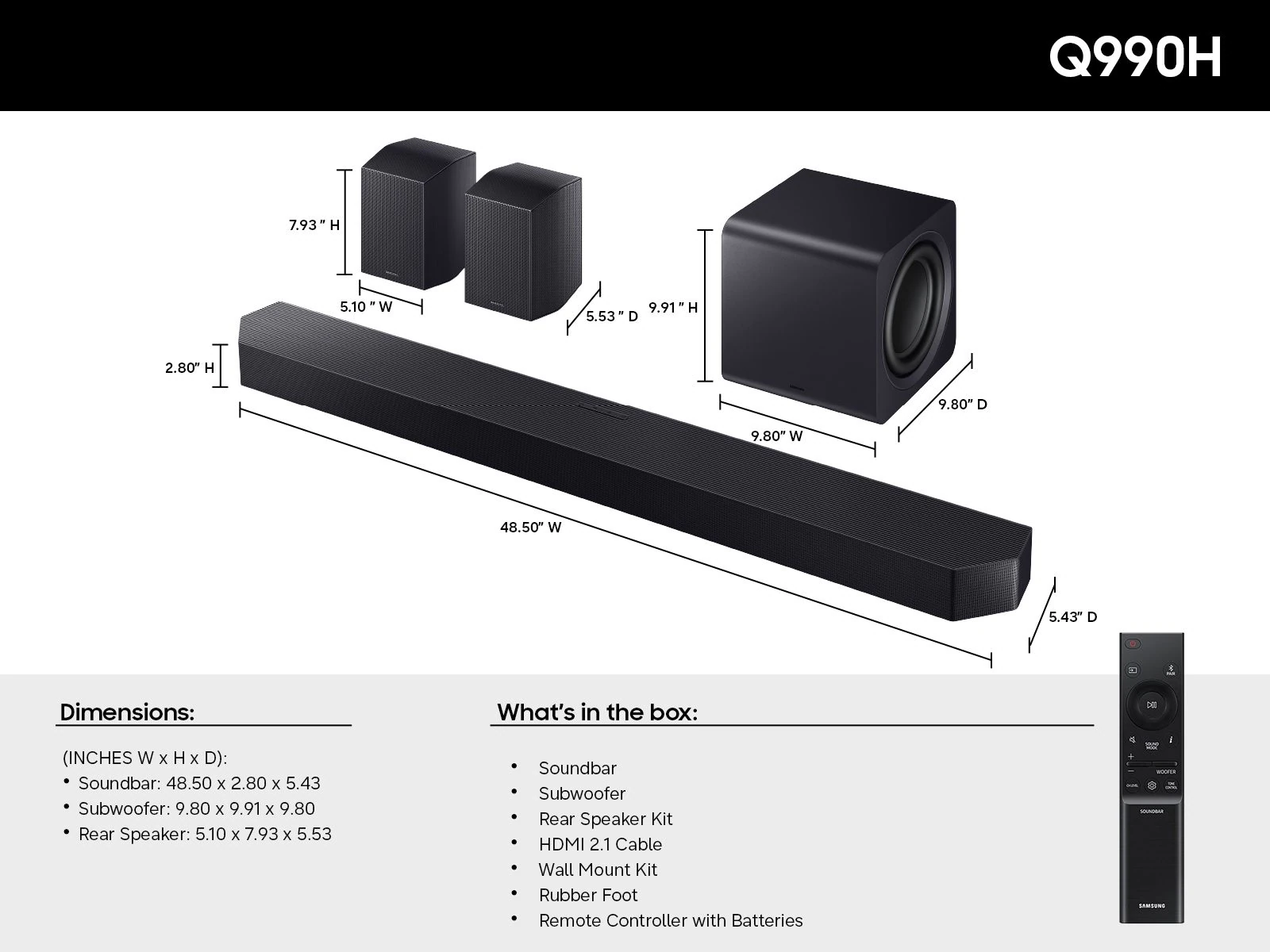
Samsung’s soundbar system is completely wireless. Only power cables are needed for each device.
Engine Room Audio’s immersive mix room is about the size of an average living room, so I felt that neither audio system was disadvantaged in total room size. However, Engine Room has significantly more acoustic absorption than most living rooms. That likely hurt the Samsung soundbar, which relies on upward-firing drivers that reflect sound off the ceiling to simulate height channels. But without getting too far into the weeds, we came to the conclusion that this was a pretty fair comparison of studio vs. living room.
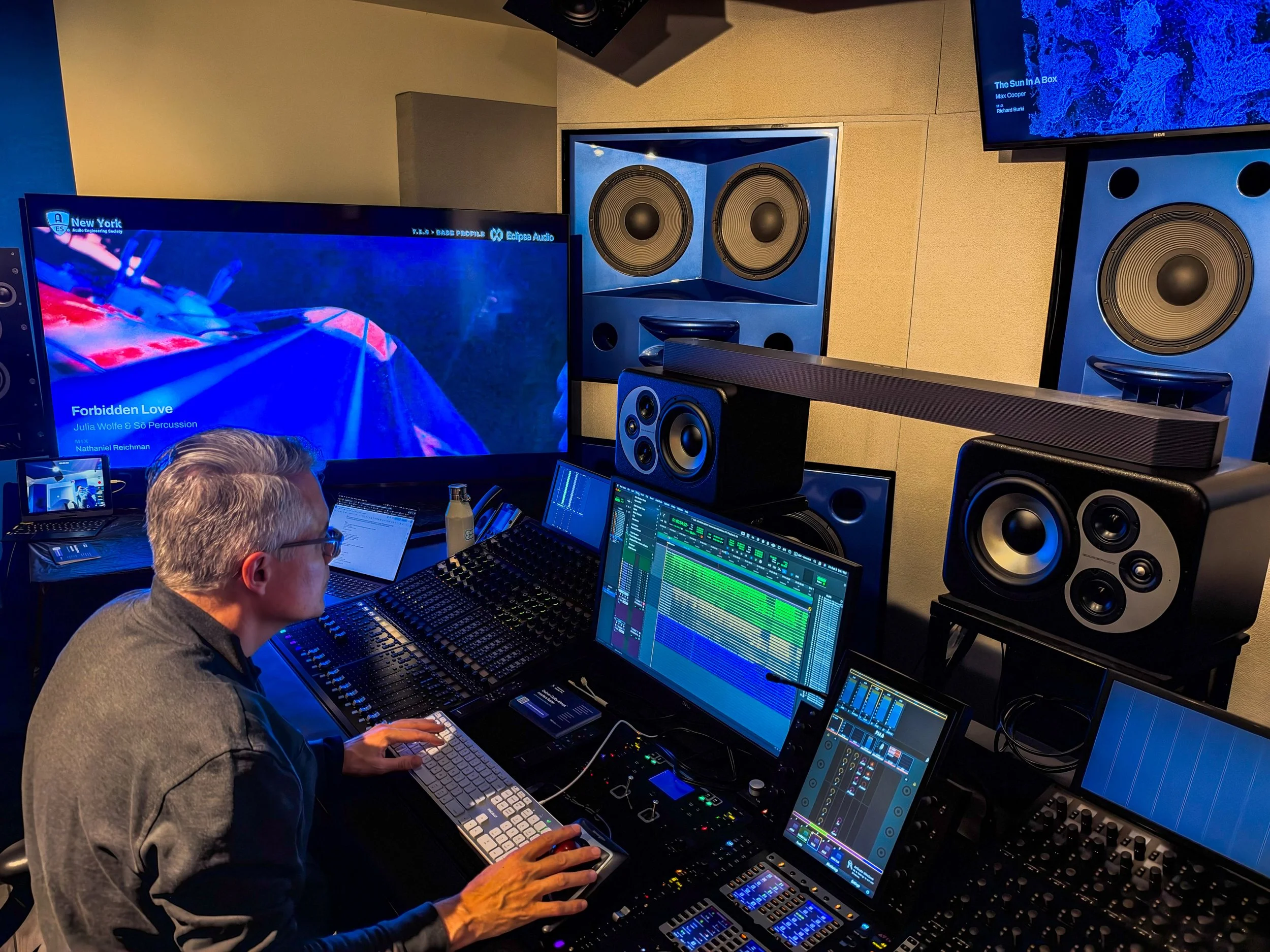
Me, hunched over Pro Tools, with the Samsung soundbar sitting on top of a pair of Barefoot loudspeakers (the Barefoots were not involved in this listening session). Note the Samsung TV to my left streaming Eclipsa Audio from YouTube to the soundbar.
What Did We Hear?
I want to be completely clear: the Engine Room loudspeakers were better in every way: wider soundstage, greater detail, and more dynamic. But the absolutely stunning result of the listening session was that the Samsung soundbar often came close to Engine Room’s loudspeakers in each subjective listening category. The expected drop in audio quality wasn’t huge, and every once in a while, a listener nudged me with a quizzical look and asked, “What system are we hearing right now?”
One of the first tracks I played was “The Elder,” a gorgeous jazz piece performed by the Hoff Ensemble and produced by Morten Lindberg. The bass is rich and chocolatey, every instrument is distinct, and the sound field is even throughout the immersive channels. The Samsung subwoofer had no problem with those rich, low tones, and the Samsung rear surrounds held up the back and sides of the room in an uncanny and completely even way. Switching from the Engine Room system to the Samsung was not disappointing. Very impressive.
Listening to Andrew Law’s mix of Duckwrth’s humorous hip-hop track “Escapist,” the Samsung soundbar delivered tight and satisfying bass and clear high percussion. The soundbar does hip-hop pretty well.
Justin Gray’s “Beyond” from his GRAMMY-winning album Immersed played beautifully on the soundbar. The Samsung center channel delivered the saxophone’s tone well. A touch more nasal than a studio speaker, but basically fine.
My own mix from a Fred again.. live show of his hit song “Victory Lap” began to show the limits of the Samsung. Electronic percussion sounded a little boxier, and the cheering crowd in the rear surrounds and heights sounded tinny compared to the Engine Room loudspeakers. Not bad overall, just not as full.
“Cool. Now can you play that on the soundbar?”
“That was the soundbar.”
Crowd Response
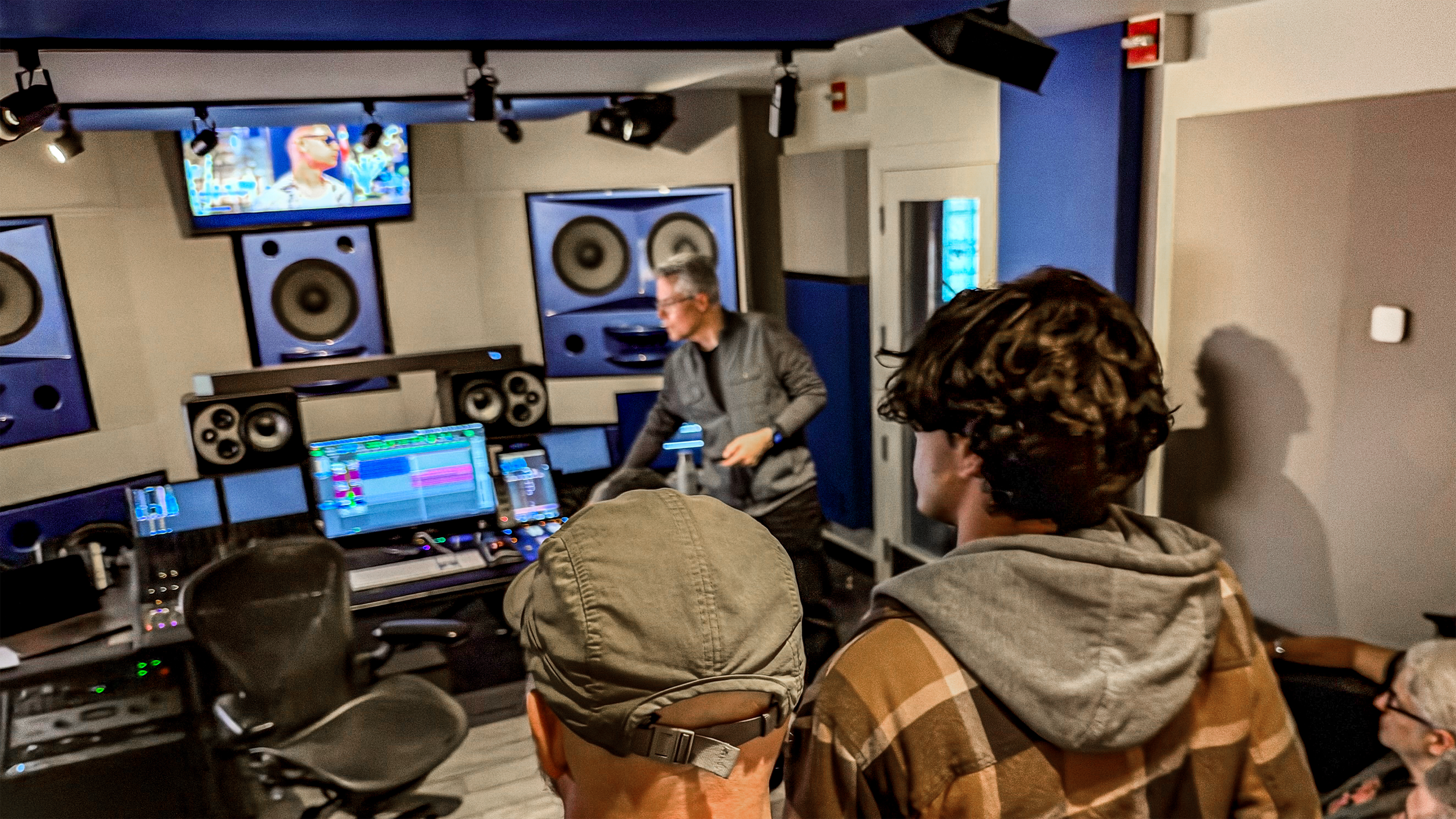
We had a number of rooms going for the event, so people were in and out of the mix room. I was running the demo. Again and again, an experienced mixer would sit down on the couch, listen and then say,
“Cool. Now can you play that on the soundbar?” And I would say, “That was the soundbar.” (That raised some eyebrows.)
Another mixer posted later, “Totally blew my mind how good that Samsung sound bar is.”
And an experienced listener who is historically not a fan of classic, big-studio Augspurgers sniffed and said, “I think I prefer the Samsung.”
Soundbars Reward Fully Immersive Mixes
It was the front-heavy, left/right-dominant immersive mixes that suffered the most when switching between Engine Room’s loudspeakers and the Samsung soundbar. These are mixes that have most of their energy in the front left and right, with only light effects or maybe background vocals in the surrounds and heights. They sound great on pro speakers, but on the Samsung soundbar, all that energy is forced into the front, revealing the inexpensive drivers and physically small and boxy nature of that front slab. I was reminded of how underwhelming the Samsung was playing stereo music in my living room. If we had spent the evening listening to glistening, bass-light, stereo ’80s pop mixes, there wouldn't have been anything to write about. But modern immersive mixes with space, deep bass and sound coming from everywhere translate really well.
Conclusions for Mixers
“Don’t be cynical and assume that subtle decisions in the Dolby Atmos or Eclipsa Audio version don’t matter much. They do.”
I’ve got two big takeaways for the readers of our news feed based on all of this listening. The first is that decisions you make mixing in an immersive studio will be heard by the consumer. Don’t be cynical and assume that subtle decisions in the Dolby Atmos or Eclipsa Audio version don’t matter much. They do. These top soundbars are revealing.
The second takeaway is that the soundbars reward mixes that use the entire immersive field. Over the last few years, the received wisdom has been that front-heavy immersive mixes are safe and preserve impact. On the soundbars, I don’t think that’s true, and the consensus around playing it safe might actually be hurting immersive mix translation to the average home living room.
Disclaimer: I was not given any equipment when writing this review, and I have no financial stake in Samsung or Sony. However, I am a partner in the company Immersive Machines, LLC and we have a commercial interest in the success of both Dolby Atmos and Eclipsa Audio. Samsung is unique in the marketplace as they are the only soundbar manufacturer that supports both immersive audio formats.
New customers can try Immersive Master Pro free for 30 days. Existing customers who have not yet upgraded to our 2nd-generation license can do so at a competitive upgrade price.
For more information, contact us at info@immersive-machines.com
Download a 30-day demo of Immersive Master Pro here.